
What Is Small-Bay Industrial Real Estate? Why Accredited Investors Are Paying Attention in 2026

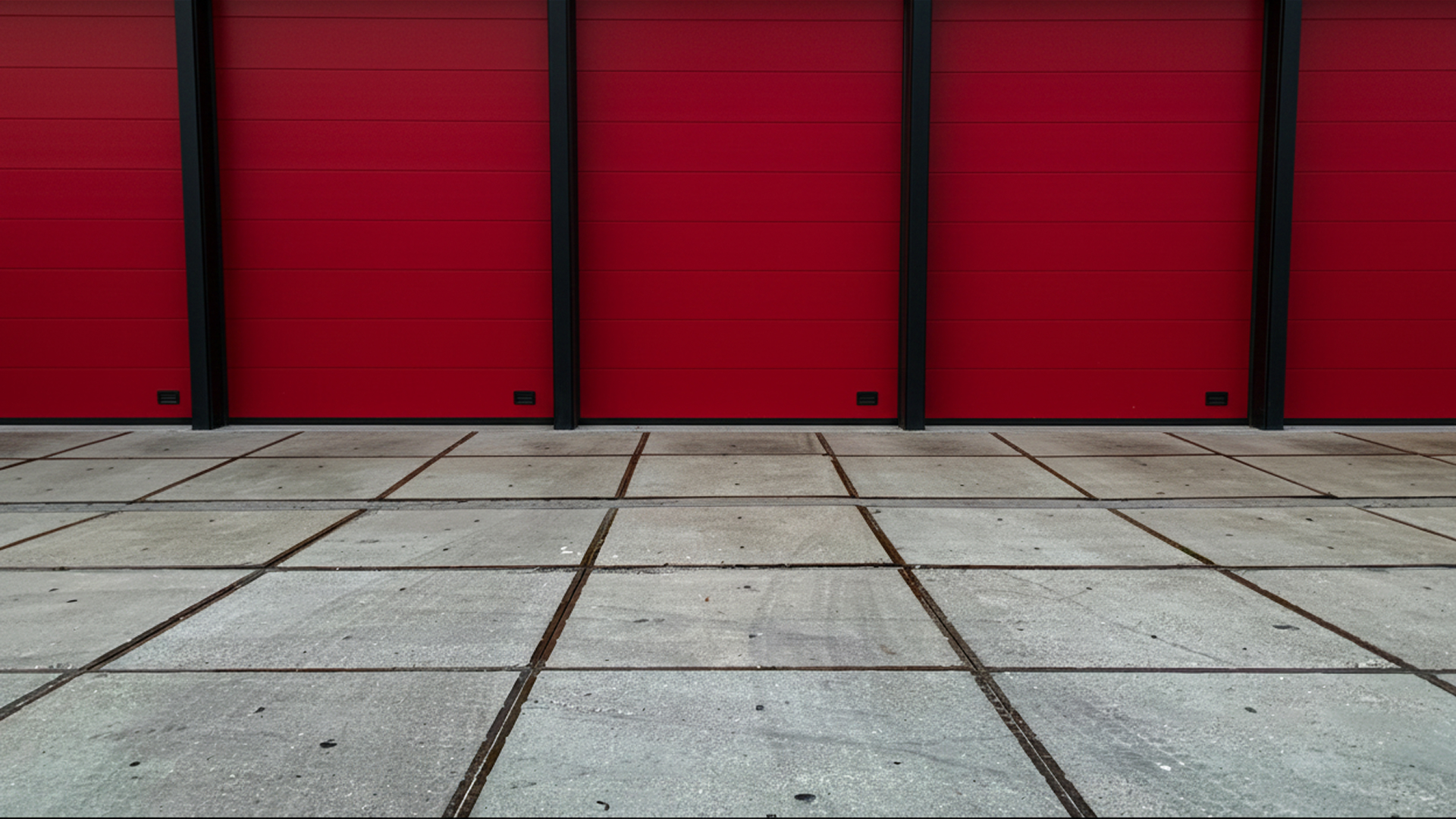


Small-bay industrial flex space. Sub-3% vacancy nationwide. Some markets with no available inventory at all. And a Texas project that delivered a 1,300% IRR. Yet most accredited investors have never heard of this asset class.
What Is Small-Bay Industrial Real Estate?
When most people hear the word 'industrial real estate,' they picture a million-square-foot Amazon warehouse or a 750,000-square-foot distribution center with elevated docks for tractor trailers. Small-bay industrial is a fundamentally different product.
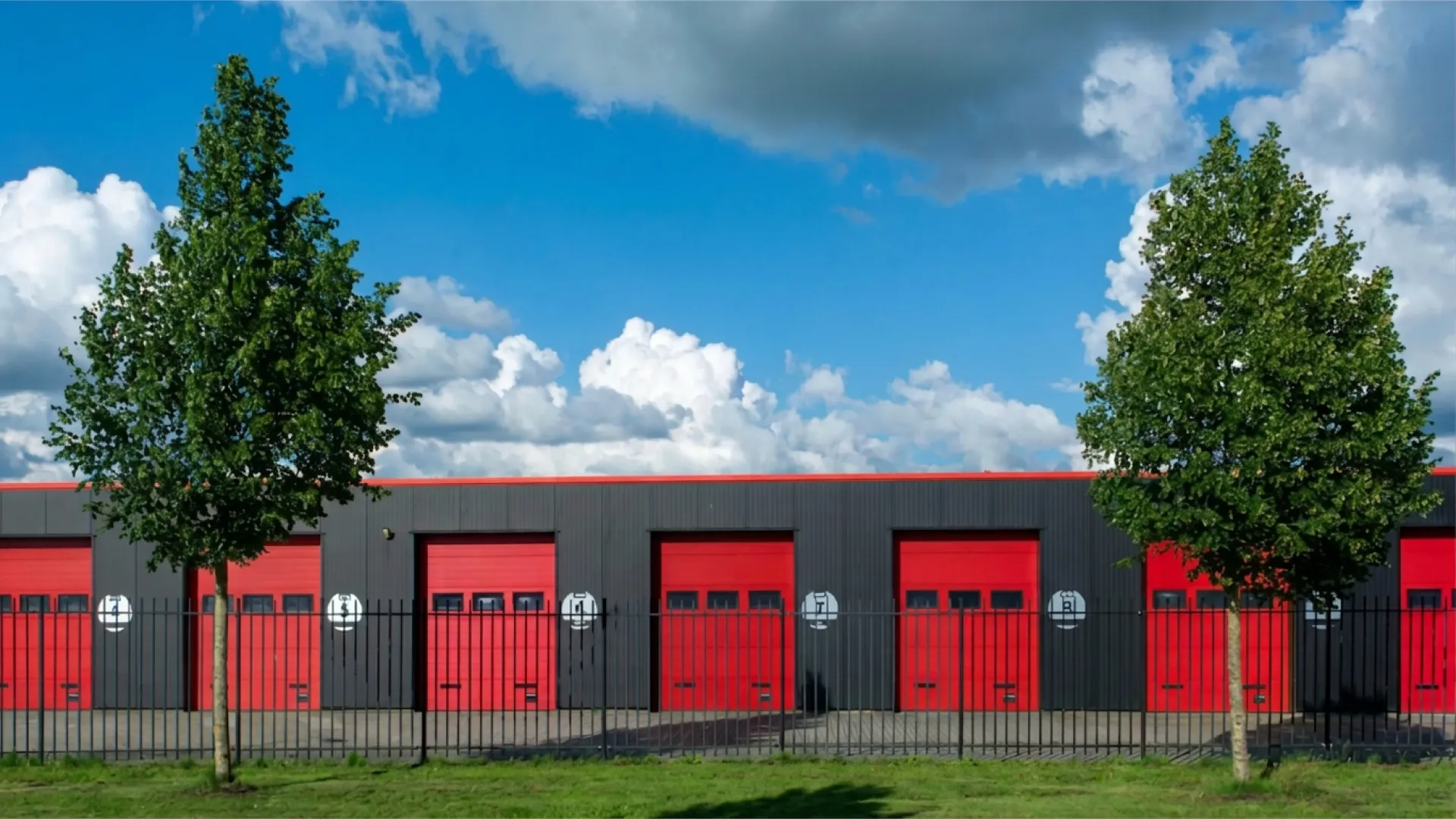
These are 10,000 to 30,000 square foot buildings, typically built in groups of 100,000 to 150,000 square foot business parks, each divided into flexible bays. The front of each unit has office space. The back has warehouse space. There is a roll-up door.
The tenants are not Amazon. They are the HVAC contractor who services your neighborhood. The plumbing company. The pest control service. The landscaper. The last-mile logistics operator. The coffee business shipping 200 orders a day out of a 1,000 square foot space with a UPS pickup twice daily.
"Small-bay industrial is outperforming every other sector in the real estate industry today. Not just commercial real estate. All of real estate." - Paul Bennett, AAA Storage Investments
The product has existed for decades. What has changed is that serious capital is finally starting to pay attention.
Why Vacancy Has Stayed Below 3% for Three Consecutive Years
National small-bay industrial vacancy has held under 3% for three straight years. Some major markets have no available inventory at all for a standard bay requirement. This is not a short-term spike. It is a structural supply-demand imbalance that has been building quietly for over a decade.
Two forces are driving it.
On the demand side: America has become a hyperlocal economy. The number of privately owned regional businesses continues to grow. Online commerce has made last-mile logistics a necessity rather than a luxury. Every business that ships product needs storage and staging space close to its customers. That demand is not going away.
On the supply side: the developers who could build this product simply do not want to. A large industrial developer would much rather build a single million-square-foot box than manage a 100,000 square foot park with 30 individual tenants. It is more efficient for them. As a result, only 23 million square feet of new small-bay supply was delivered across the entire United States in 2025. Based on current demand trends, that figure is unlikely to meet market needs.
Zoning creates an additional constraint. Many jurisdictions do not have clear pathways for this product type, which means even developers who want to build it face entitlement risk that slows or kills projects before they begin.
The result is a market where, as Paul Bennett puts it, you can call a commercial real estate broker in most major cities, ask for a 4,000 square foot bay with office in front and warehouse in back, and hear: good luck.
Key Market Data
National vacancy rate: Under 3% (some markets as low as 2%)
New supply delivered in 2025: 23 million square feet nationwide
Years at sub-3% vacancy: Three consecutive years
Occupancy comparison: Matches self-storage occupancy at its COVID-era historic peak
What the Returns Actually Look Like
AAA Storage Investments has been developing small-bay industrial since 2011. Across that track record, the return profile has been consistently compelling, and in some cases extraordinary.
The standard underwriting target for a small-bay project at AAA is a 10.5% yield on cost. That is the projected net operating income as a percentage of total construction cost. For context, AAA underwrites its self-storage projects to a 9.5% yield on cost. Small bay runs higher.
Here is what that math produces in practice. A project costs $12 million to build. Once stabilized, those cash flows are valued by the capital markets at $21 million. At 60 to 70% loan-to-cost leverage, that gap between cost and value generates equity multiples of 3x or greater over a three-and-a-half to four-and-a-half year hold period.
"It costs us $12 million to build it. When we get it stabilized, it's worth $21 million. When you lever that 60 to 70% loan to cost, you're talking about three-plus equity multiples over three and a half to four and a half years." - Paul Bennett
The outlier result in AAA's portfolio: a small-bay project in Texas that delivered a 1,300% IRR for its investors, driven by an extraordinary sale price achieved in an unusually short timeframe. Paul is quick to note that this will not happen again, and it is not what investors should underwrite to. But it illustrates the ceiling of what this asset class can produce when market timing, execution, and capital structure align.
How Triple Net Leases Protect Investors From Rising Costs
One of the structural advantages of small-bay industrial that is often overlooked: all leases are triple net.
In a triple net lease, the tenant pays property taxes, property insurance, and common area maintenance on a pro-rata basis in addition to base rent. The landlord, and by extension the investors, are insulated from cost increases in those categories.
This matters more today than it did five years ago. Property taxes and property insurance premiums have risen dramatically across commercial real estate in recent years, particularly in Texas and the Carolinas where AAA primarily develops. In a gross lease structure, those increases eat directly into net operating income. In a triple net structure, they pass through to tenants.
The result is a more predictable NOI for investors and a more defensible asset valuation, regardless of the inflationary environment.
How AAA's Development Model Is Different
AAA Storage's approach to small-bay development differs from the market standard in three ways that directly affect investor returns and occupancy velocity.
1. Entitlement risk is eliminated before investors are involved.
AAA secures land, navigates the zoning and entitlement process, and gets the project ready for construction before any investor capital is deployed. The risk of a project dying in permitting sits with AAA, not the fund.
2. Buildings are built as cold, dark shells.
Rather than pre-finishing spaces to a standard configuration, AAA builds slab-on-grade metal buildings with 25-foot clear-span ceilings and waits until tenants are secured. This means every space can be carved to match the tenant's exact requirement. A pickleball facility needs an entire 20,000 square foot building with open floor plan. An HVAC contractor needs 3,000 square feet with a thousand square feet of office in front and rack storage in back. Both get exactly what they need from the same building shell.
3. AAA finances and manages the tenant build-out.
In the standard commercial leasing model, a tenant negotiates a build-out allowance from the landlord, then goes and hires their own architect and general contractor, manages the construction process themselves, pays for everything upfront, and receives the allowance reimbursement after they move in. For a small business that cannot write a $250,000 check, this is often a deal killer.
AAA eliminates this barrier entirely. The team designs the build-out internally, executes the construction, and amortizes the cost through the tenant's lease over the lease term. The tenant pays a slightly higher monthly rent rather than a large upfront capital outlay. This broadens the tenant pool significantly, accelerates lease-up, and creates stronger occupancy stability.
"We signed a lease with a local church that needs 15,000 square feet. They probably couldn't write a $250,000 check. But we'll design the build-out, execute it, and finance it through their lease. That's how we make it easy for tenants to move in." - Paul Bennett
How Small-Bay Industrial and Self-Storage Work Together in Fund 2
AAA Storage Growth Fund 2 allocates 60% to self-storage development and 40% to small-bay industrial. For investors, this creates an unusual level of diversification within a single investment.
A $200,000 investment in Fund 2 is spread across four markets, Austin, San Antonio, Houston, and Charlotte, and across two distinct property types with different demand drivers, different underwriting data sets, and different tenant bases.
When the market and underwriting data support it, AAA develops both product types on adjacent parcels of the same land tract. A 17-acre site outside Charlotte, for example, is being subdivided to accommodate both a self-storage facility and a small-bay industrial park. This structure generates real cost efficiencies in civil engineering, shared infrastructure, and utility connections.
There is also genuine customer overlap between the two product types. Business tenants who start in a self-storage unit frequently graduate to a small-bay bay as their operation grows. Small-bay tenants who fill their warehouse space often rent a storage unit on the adjacent property to handle overflow inventory. The two businesses support each other's occupancy.
Despite the shared land and customer base, each product type is underwritten independently. If the small-bay numbers do not work in a given market, the project does not get approved for that component, even if the storage numbers are strong. Both have to clear the investment committee separately.
What Recession Risk Actually Looks Like for This Asset Class
The tenant base in small-bay industrial sits very close to the ground in the economy. HVAC contractors. Plumbers. Pest control companies. Landscapers. These are not businesses that disappear in a mild economic downturn. Homeowners do not stop calling a plumber when the economy softens.
A meaningful recession scenario would need to be severe enough to reduce consumer spending on basic home services before it materially affected small-bay occupancy. That is a higher bar than most real estate asset classes face.
Institutional capital is beginning to recognize this. Interest in small-bay industrial from institutional investors has increased noticeably in recent years. But the product remains highly fragmented, with individual parks ranging from $12 million to $20 million in development cost, which limits the scale at which institutional players can deploy capital efficiently. Private investors retain a meaningful access advantage in this window.
Ready to Learn More About Investing With AAA Storage?
AAA Storage Investments develops ground-up self-storage and small-bay industrial across Texas and the Carolinas. Growth Fund 2 is currently open to accredited investors.
If you are an accredited investor evaluating private real estate alternatives, we would like to start a conversation. Reach out through our contact form at aaastorageinvestments.com.
You can also hear Paul Bennett break down this asset class in full detail on The AAA Storage Podcast, available on Apple Podcasts, Spotify, and YouTube.
Find more expertise.



Stay updated with our newsletter.
Subscribe now for the latest news, tips, and exclusive content delivered straight to your inbox.
