
What Can't AI Replace? Investing in the Physical Economy | The AAA Storage Podcast #48

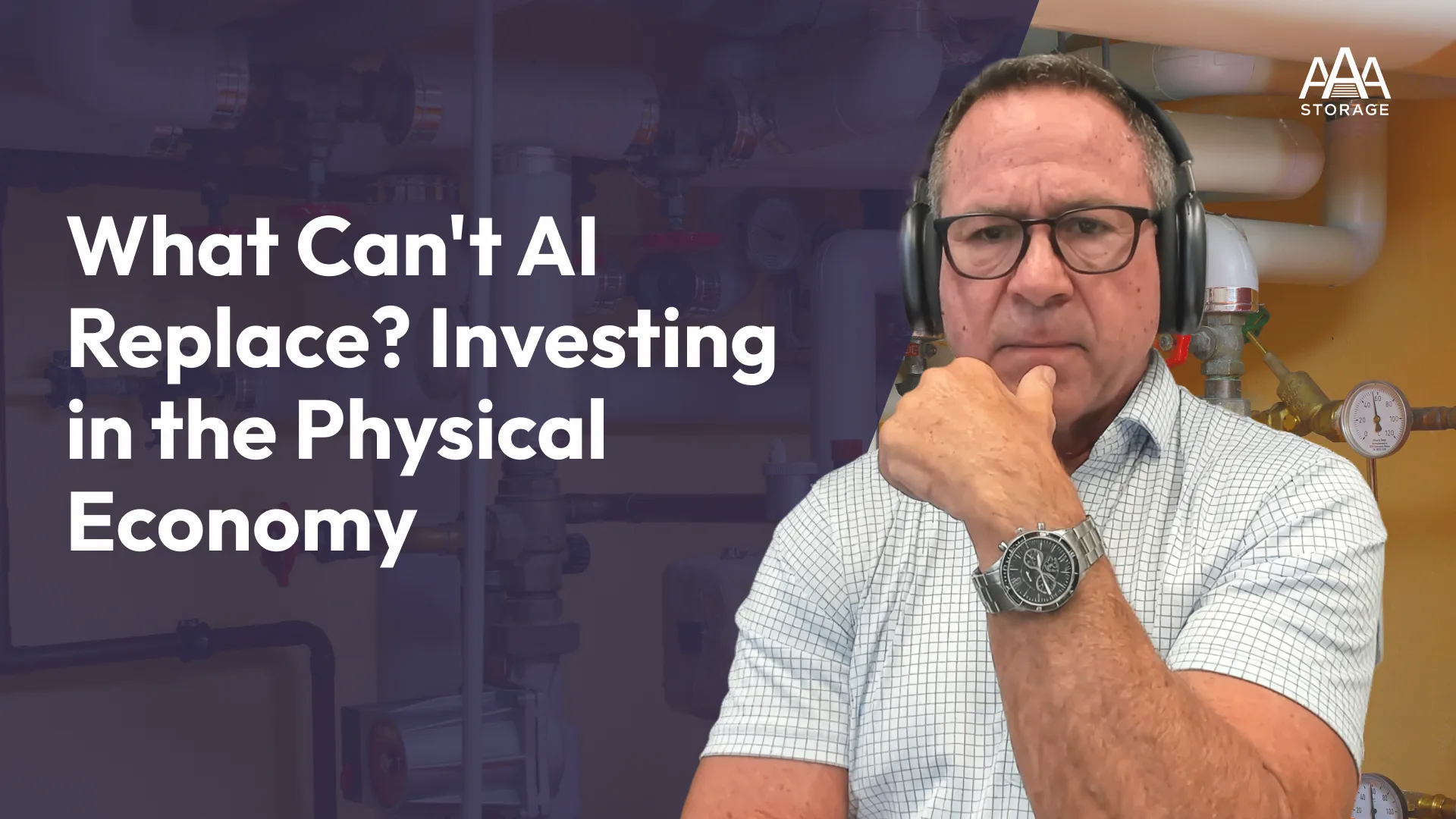


Investors are being asked to commit capital for five, seven, or ten years at a time when it is hard to predict the next six months. A lot of that uncertainty comes from AI. On this episode, we look at where AI fits in real estate, and where it doesn't.
A Tool We Use Every Day
Self-storage pricing has changed completely over my career. When most operators had no website, we couldn't see what competitors charged. Now AI agents gather that data and recommend rates for every unit type, and the large REITs adjust pricing hourly. Inside our own company, AI has cut a bank reconciliation that took three or four people several days down to a few hours of review, and I expect it to take on work like cost segregation studies before long. It is making us more efficient, and I expect it to make us a better developer and operator.
Headcount Versus Physical Need
Where AI matters to a landlord is in the tenant's business. An office tenant that can do the same work with half the staff needs half the space. A plumber, an HVAC contractor, a pickleball facility, or a family clearing out a parent's home still needs room for people, tools, and belongings. As Brandon put it, we have bodies, so we still need space. Even the most advanced self-driving car needs somewhere to park. That is why I see little AI-specific risk in self-storage and small-bay, while the usual real estate risks of oversupply, vacancy, and rate pressure still have to be managed.
When Digital Growth Lands on the Ground
Data centers and chip plants pull a wave of vendors in behind them. We saw it years ago around the BMW plant in Spartanburg, South Carolina, and we are seeing it now near Samsung's plant outside Austin, where we converted our Hutto project to all small-bay. My approach is to avoid predictions and favor buildings that can serve many kinds of tenants.
Key Takeaways
• AI is changing how real estate is operated faster than it is changing why tenants need space.
• Office demand is tied to headcount. Self-storage and small-bay demand is tied to physical need.
• Large technology facilities create demand for nearby space from the vendors who serve them.
• Favor assets with optionality: many potential users, low conversion cost, no single-industry dependence.
• Traditional real estate risks still apply and still need active management.
For a deeper look, read AI and Real Estate Investing: What Technology Can't Replace
Ready to talk about your investment strategy? Reach out at https://www.aaastorageinvestments.com/contact
Follow and Connect with Us
• LinkedIn: https://www.linkedin.com/company/aaa-storage-investments/
• Instagram: https://www.instagram.com/aaastorageinvestments/
• X: https://x.com/investments_aaa
• Facebook: https://www.facebook.com/people/AAA-Storage-Investments-LLC/61575027573292/
Find more expertise.



Stay updated with our newsletter.
Subscribe now for the latest news, tips, and exclusive content delivered straight to your inbox.
