
Understanding private real estate development, from site selection through exit.
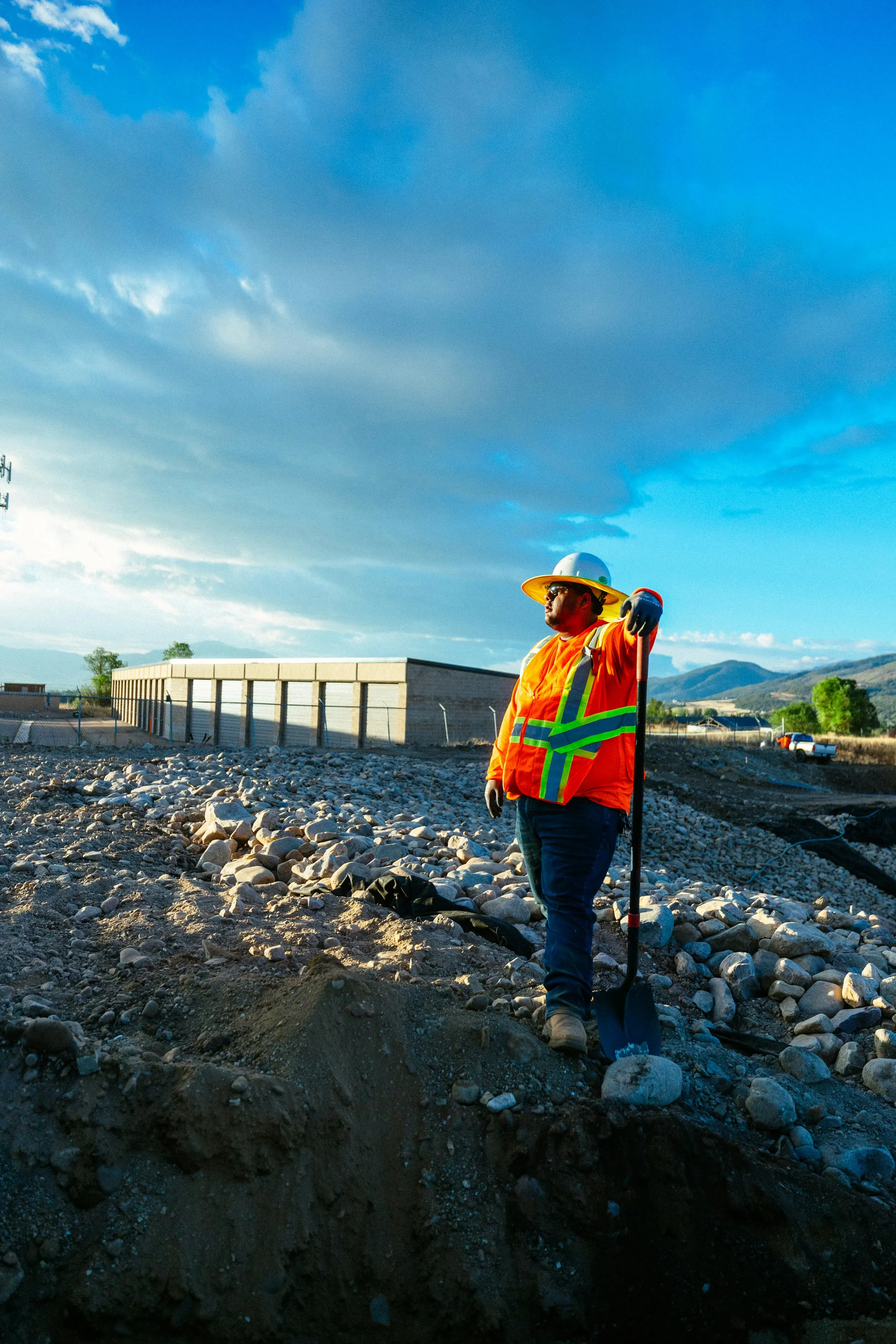
Most educational content about private real estate investing is written for people buying an already-stabilized property, one that's leased up, generating income, and easy to evaluate vs. comparable properties and market cap rates. Ground-up development is a different animal, and most investors evaluating it have never had anyone walk them through what happens between buying dirt and receiving a distribution.
This guide follows that process in the order it actually unfolds: finding the opportunity, securing entitlements, financing the deal, building it, leasing it up, stabilizing performance, and eventually exiting. At each stage, you'll see the terminology that matters, why it matters to you as a passive investor, and how AAA specifically approaches that stage of the process. The companion Evaluation Checklist, available at the end of this guide, turns all of it into 64 checkpoints and 16 questions you can put to any sponsor.
Self-storage doesn't behave like a stock or a national real estate index. Its performance is driven almost entirely by what's happening within a one, three, and five mile radius of a specific property, not by broad economic indicators. A property can outperform its projections even in a difficult national environment if local dynamics are strong: population growth, limited new competing supply, nearby employers. The reverse holds true just as often.
AAA evaluates every market against a specific, repeatable set of benchmarks rather than a general read on a city or region. Two of the core metrics: square feet of self-storage per capita (roughly 10 square feet per capita is a general saturation threshold, though high-growth markets like parts of Texas and Florida can absorb more) and the percentage of new supply entering a market relative to what already exists (expansion beyond 20 to 30 percent is treated as a caution flag). Population density is weighed against population growth together, since a strong growth percentage on a small existing base can be misleading on its own.
Learn more in Episode 10:
Underwriting is the process of analyzing a site's market data, feasibility, and financial projections to reach a go or no-go investment decision. At AAA, this isn't a single calculation done once. It happens twice: once at the market level when land is acquired, and again roughly two years later once the project is fully designed and real construction cost data is available, when the actual investment decision gets made.
The process generally moves through three stages: assessing market dynamics, quantifying supply and demand within the defined hyperlocal market, and building that data into a financial model. Sites are scored against a weighted set of ten to twelve factors, including population density and growth, competitor count and type, rental rate benchmarks, land cost, and incoming new supply, so no single metric decides the outcome alone. This two-stage structure exists for a specific reason: it means AAA is asking you to trust a site that's been vetted twice, not a single projection made before construction costs were even known.
Learn more in Episode 19:
Yield on cost measures a property's projected annual net operating income as a yield on or percentage of what it costs to build. If a project costs $10 million to develop and is projected to generate $950,000 in annual net operating income once stabilized, that's a 9.5 percent yield on cost. This is the core metric AAA uses to predict a development's eventual profitability before a single dollar of construction is spent, calculated once a full cost estimate and pro forma are built out.
Reality never matches a projection exactly, so property performance is actively managed throughout stabilization, not just measured at the end. Rental rates and lease-up pace are treated as connected levers: if leasing is running ahead of budget, AAA may lean more aggressively into rate growth to drive a higher return; if lease up is lagging, the response might be lower rates to drive occupancy and a long term plan to ultimately achieve the projected rates. Some risks, like hitting rock during site grading or changes in the market supply mid-lease up, simply can't be predicted or controlled, which is a real part of why AAA structures investments as multi-property funds rather than single-property deals: one underperforming project doesn't define the outcome for the whole portfolio, and one outperforming project doesn't need to either.
Learn more in Episode 6:
AAA doesn't search broadly for opportunities. Instead, the team identifies specific metro areas, primarily in the Sunbelt, and more precisely, specific submarkets within them (communities like Gastonia relative to Charlotte, or Buda relative to Austin) that fit AAA's investment strategy. Within those targeted submarkets, the team relies on broker relationships and personal networks built over time to surface opportunities before they're widely marketed. Many of AAA's off-market deals originate with a seller reaching out directly, a byproduct of those long-standing relationships rather than AAA constantly canvassing a market cold.
Once a potential site is identified, it goes through an initial review of the market and how the site fits AAA's fund strategy. If it doesn't pass, it's dropped immediately. If it does, AAA's construction and development leadership weighs in with their own assessment before AAA moves forward with a letter of intent to the seller. From there, some negotiation with the seller is typical.
Once a letter of intent is accepted, AAA enters a 45 to 90 day due diligence period, after which the opportunity is formally presented to AAA's Investment Committee for review and a final decision. If approved, the purchase is made and AAA's team facilitates the closing process directly with the seller. A site clears several internal checkpoints, an initial review, a construction assessment, due diligence, and Investment Committee approval, before AAA ever commits capital to it, which is the same discipline standing behind every project an investor ultimately puts money into.

Before AAA ever purchases a site, and again before construction can begin, the property goes through a pre-development phase led by AAA's in-house land development and construction team. This starts with confirming the property is zoned correctly for what AAA intends to build, then moves into researching everything that could add cost or delay: utility availability, preliminary site plans, building design requirements, and local jurisdiction rules.
A few specific constraints shape almost every project. Most jurisdictions cap how much of a site can be covered by non-permeable surfaces like concrete or building pads, known as impervious cover, which directly limits how large a building or parking area can be. Utility access and easements can also affect cost and site design substantially. And in many markets, the Department of Transportation may require AAA to fund road improvements, like a turn lane or deceleration lane, if a project is expected to affect nearby traffic flow, an unavoidable cost that has to be identified early rather than discovered mid-project.
How long it takes to move from land purchase to a construction start depends almost entirely on the jurisdiction. Larger cities generally mean a longer, more complex permitting process, sometimes involving a planning commission with a full staff reviewing every detail. Smaller jurisdictions are often faster, sometimes involving little more than a conversation with the local fire marshal. Certain requirements, like a Planned Land Amendment in some jurisdictions, can add as much as nine months to a project's timeline on their own.
This is a direct reason AAA tends to build in smaller communities surrounding major metro areas, rather than in the urban core itself. Faster, more predictable permitting reduces both the time and the risk sitting between land acquisition and a project breaking ground, which matters to investors since a longer entitlement timeline delays when a project starts generating any return at all.
Learn more in Episode 21:

Every real estate investment is funded through some combination of debt and equity. From an investment standpoint where a specific investment sits in that mix, known as the capital stack, determines both its risk and its return. At the bottom sits senior debt, secured directly by the property itself. It carries the lowest return but the least risk, since a senior lender has the first legal claim on the property if something goes wrong. Above that sits mezzanine debt, a secondary loan that carries more risk and a higher rate, followed by preferred equity, and finally common equity, which carries the highest risk and the highest potential return.
AAA's funds are structured using only two of these layers: senior debt and common equity, skipping mezzanine debt and preferred equity entirely. Which layer makes sense for an investor depends almost entirely on their own goals. Someone prioritizing current income and capital preservation, often an investor nearing or in retirement, is better suited to the senior debt side of the stack. Someone still in their wealth accumulation years, more focused on long-term equity growth than current income, is better suited to common equity, which is where AAA's investors sit.
Learn more in Episode 7:

Once all permits are received, construction moves through two distinct phases: horizontal work (site grading, utilities, retention ponds, foundations) and vertical work (the actual buildings going up). Site work is usually the slower, more weather-dependent phase, and it's also where the biggest cost swings tend to happen, since moving dirt on or off a site gets expensive fast. AAA's team designs around a site's existing grade wherever possible to minimize how much fill has to be brought in or removed. On one Growth Fund 1 project, re-engineering the civil plan to reduce required fill cut roughly $400,000 in cost, the kind of value engineering AAA looks for throughout the process, not just at the start.
For larger sites, construction is often phased. Rather than building every unit at once, AAA may complete the site work for the full project but only bring the first phase of buildings out of the ground, waiting until that phase reaches meaningful occupancy, often 60 to 70 percent leased, before starting phase two. That approach lets leasing momentum carry from one phase into the next rather than delivering a large amount of empty space all at once and avoids paying interest carry on buildings that won't be leased for 12-18 months. A typical timeline runs roughly six to eight months to construct phase one and three to six months for phase two, largely because most of the site work is already completed by that point.
Construction timelines are managed by coordinating loan and equity funding on one side with permitting status and construction crew availability on the other, since AAA has multiple projects in phase 1 or phase 2 construction at any point in time. AAA manages the construction schedule for its dedicated crews that build most of its Texas projects but also works with a small number of carefully selected general contractors for projects outside Texas and to manage workload and timing within Texas when needed.
Cost discipline continues throughout construction, not just during pre-development. On one project, taking the time to have a floodplain map redrawn with FEMA moved a building out of the floodplain entirely, avoiding a far more expensive flood-proofing requirement and additional insurance costs once the project was operational. Most sites also require retention ponds and drainage work to prevent runoff issues for neighboring properties, a real cost that's accounted for from the outset rather than discovered mid-project. These are small decisions individually, but they're the kind of ongoing attention that protects a project's return long after the initial underwriting is done.
Learn more in Episode 21:
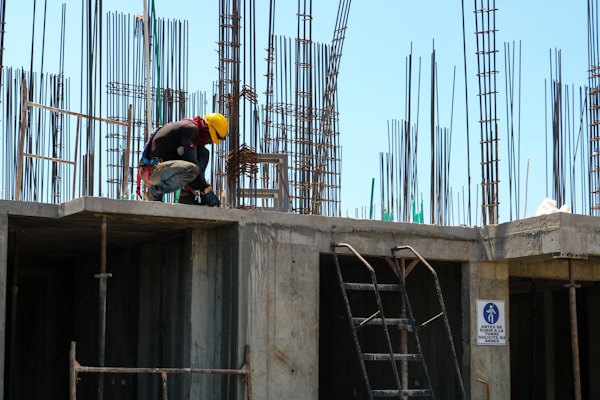
Once a facility opens, the objective shifts entirely to leasing it up as quickly as possible, since an empty building generates no revenue no matter how well it was designed or built. In the first three to twelve months of operation, AAA's property management team typically spends more heavily on marketing, promotions, and discounted rates specifically to steepen that early lease-up curve, prioritizing occupancy growth over maximizing rate in the short term.
That approach changes once a property reaches meaningful occupancy, generally in the 80 to 90 percent range. At that point, deep discounting stops being necessary or advisable, and the focus shifts to customer retention and more measured, ongoing rate increases for existing tenants. A highly leased facility can also afford to be more assertive with rate increases on existing tenants, since some resulting turnover simply creates room to re-lease those units at current market rates.
Self-storage has become a largely digital, self-service business, with most customers now reserving, renting, and paying for a unit entirely online, often without ever speaking to a person. That shift has made real-time, hyper-local pricing data essential, since self-storage is a highly price-sensitive product and rates can vary dramatically between facilities just a few miles apart depending on how competitors are pricing at any given moment.
National occupancy for the self-storage industry generally sits in the low 90s on a percentage basis, though local conditions can push well above or below that. In markets where large REITs and institutional operators are aggressively discounting to protect occupancy, staying closely tuned to real-time local pricing data becomes critical, a facility that isn't actively tracking nearby competitor pricing can end up significantly overpriced or underpriced without realizing it. This is active, hands-on management of the asset, not a passive collection of rent checks, and it's a direct driver of whether a stabilized property hits its projected return.
Learn more in Episode 5:
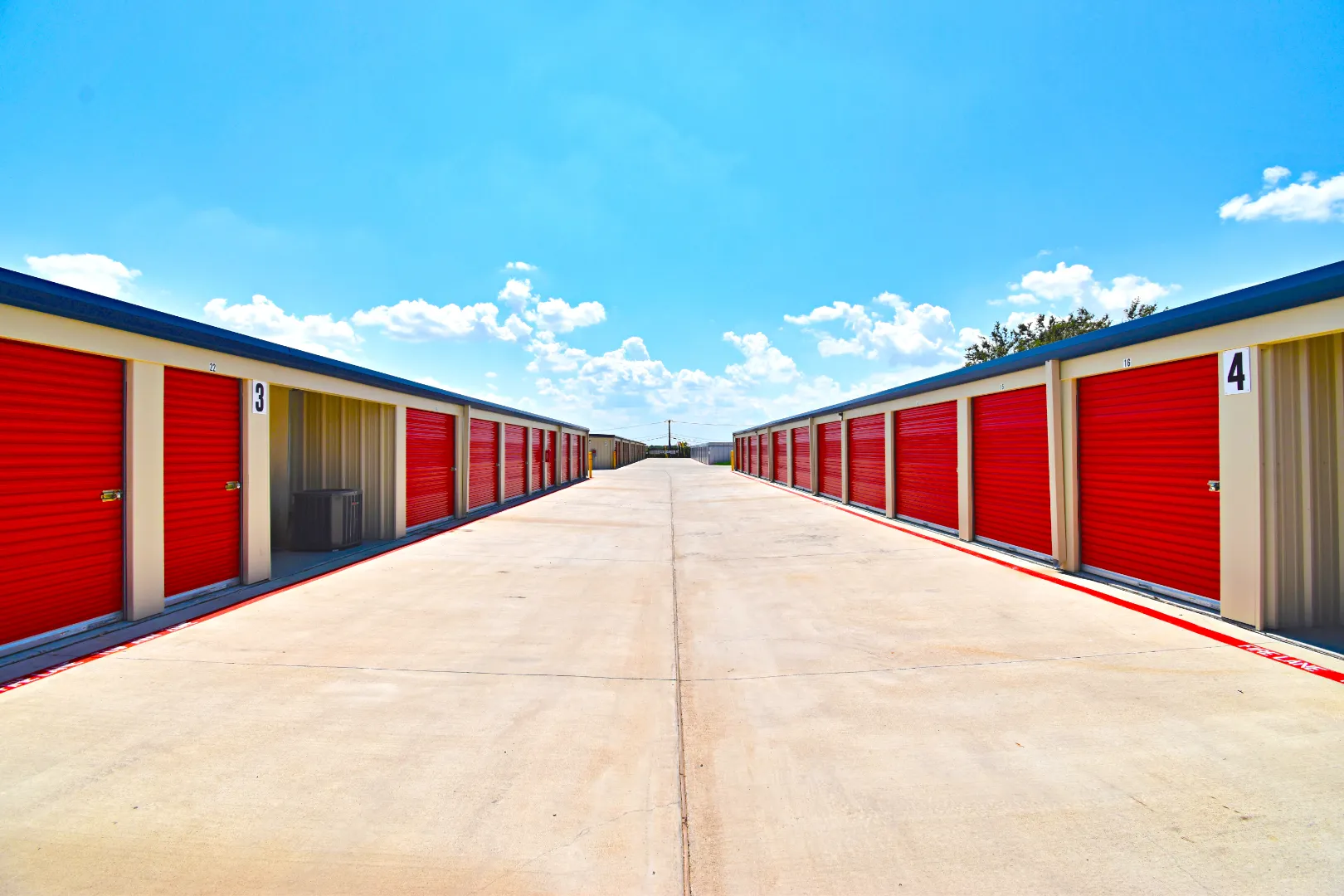
A cap rate, short for capitalization rate, is the yield a property produces based on its current net operating income, and it's the primary way commercial real estate is valued in the market. If a property generates $500,000 in annual net operating income and is valued using a 5 percent cap rate, it's worth $10 million. Cap rates move based on multiple factors: prevailing interest rates, since real estate is always compared to other yield-generating investments, the reliability of a property's cash flow (a fully-leased grocery-anchored shopping center commands a lower cap rate than a hotel, where occupancy turns over nightly), and local supply and demand for that property type.
Development spread is what makes ground-up development different from buying an already-stabilized asset. It's the gap between a project's yield on cost and the market cap rate it's expected to sell at once stabilized. If a self-storage project is built at a 9.5 percent yield on cost and the market values comparable stabilized storage assets at a 6 percent cap rate, that's a 3.5 percentage point development spread, and it's this spread, not the cap rate alone, that drives a development project's profit margin. Dividing yield on cost by the market cap rate and subtracting one gives the projected gross profit margin at stabilization, in that example, just over 58 percent.
Once a property is stabilized and sold, the numbers behind development spread turn into an actual return for investors. Take a project built for $10 million, generating $950,000 in annual net operating income (a 9.5 percent yield on cost), then sold at a 6 percent cap rate once stabilized, for roughly $16 million. If that project was financed with 30 percent equity and 70 percent debt, that's $3 million of investor equity going in. After paying off the loan when the property is sold, roughly $9 million is left to pay transaction costs and distribute back to investors via the waterfall explained below, a gross return of approximately three times their original investment. If that whole cycle takes four to five years, it works out to an IRR in the low to mid 20% range.
No individual project matches its projection exactly, which is a core reason AAA structures capital into multi-property funds rather than single-property deals. Spreading investment across several projects means a single underperforming property doesn't define an investor's outcome, since a blended portfolio return can still land in the target range even when individual projects vary significantly above or below it.
Learn more in Episode 6:
A waterfall is the set of rules governing how profits are distributed between investors and the sponsor once a project starts generating returns. The name comes from the way distributions flow: money fills one priority level completely before spilling over into the next.
The general mechanics work the same way across AAA's funds and our waterfall is applied to each property separately when it is sold: first, investors receive a complete return of their original capital invested in each project, then they receive a 7% annual preferred return on their capital in each project from the date the project was funded, and then AAA receives an amount equal to 30% of the preferred return paid to investors. After these three steps are fully funded, all remaining proceeds from the sale of a property are shared 70% to investors and 30% to AAA. Because AAA earns nothing until investors have been made whole first, the sponsor's incentive and the investor's outcome move in the same direction, not opposite ones. The specific detail for each fund is laid out in its own governing documents, the LLC agreement, and disclosed in clear terms in the offering summary. A fund with multiple projects distributes this on an investment-by-investment basis as each property sells, rather than waiting until every project in the fund is exited. AAA also invests its own capital alongside investors in every fund, subject to that same fund's waterfall and terms.
Learn more in Episode 33:
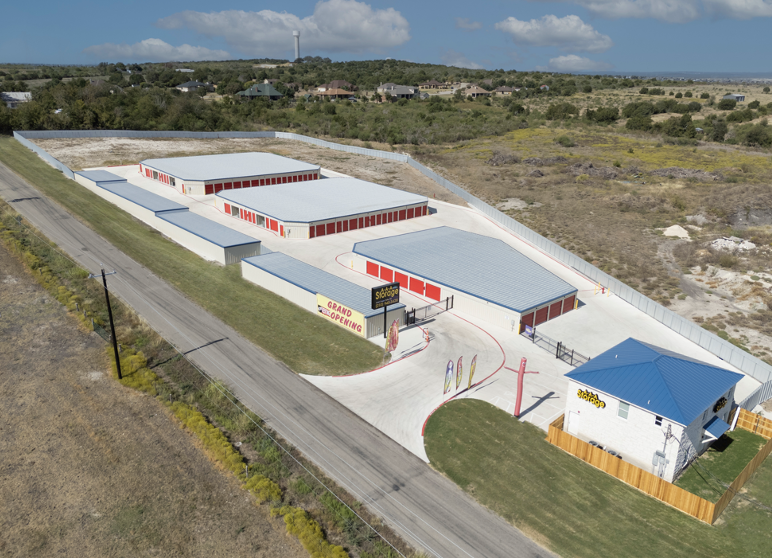
64 checkpoints across the six stages, plus 16 questions to put to any development sponsor. Enter your details and we'll send your copy through.